
 27″ IMAC Flight Cases
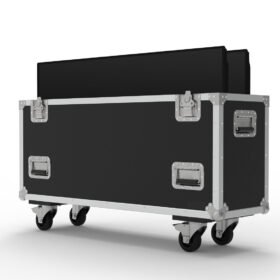 55″ + Screens
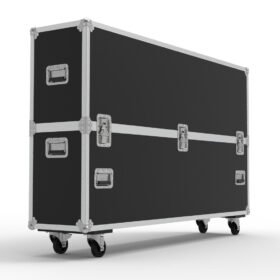 65″ + Screens
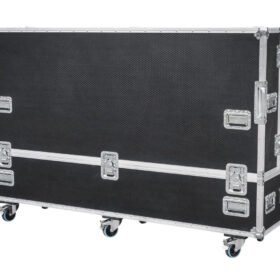 80″ + Screens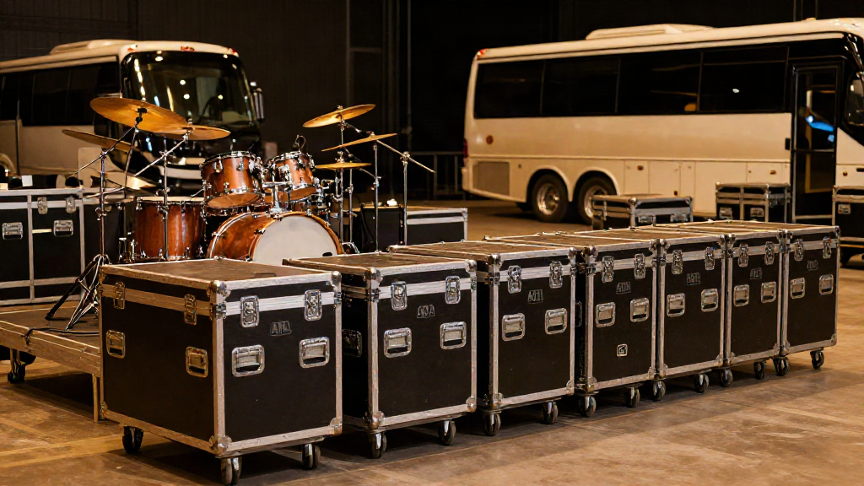
Drum Kit & Cymbal Flight Cases: Touring Packing Guide
A touring drummer’s packing guide to drum kit and cymbal flight cases: sizing, ply choice, drawer trunks for spares, and freight tips for air, road and sea.
Drum Kit and Cymbal Flight Cases: A Touring Drummer’s Packing Guide
A drum kit is the most fragile collection of expensive parts on any tour. Shells crack, cymbals bend, hardware walks off, and one bad load-in can cost you a week of shows. The answer is not more padding in a soft bag – it is the right set of drum kit and cymbal flight cases doing a specific job each.
This is the packing list we give touring drummers when they call us before a run. Work through it top to bottom and you will know exactly what to buy, what size to buy, and how it all travels by air, road and sea.
Start With the Kit Itself
Your drums travel as a group, so case them as a group. Two approaches work on tour:
- Individual hard cases for each shell, which spread the weight and let you pack tight in a truck or trailer.
- One road case with an oversized interior that swallows the whole kit in a single lift, which is faster when your load-in window is ten minutes.
Whichever you choose, buy a case with real internal dimensions, not a nominal size. Measure the widest point of each drum, including lugs and hoops, then add foam. A case that fits the shell but not the hardware is a case that fits nothing.
If you also carry a drum machine, pad or controller, a purpose-built case pays for itself. Our Numark NS6II controller flight case shows the principle: the interior is cut around one specific piece of gear so there is no rattle, no shift and no stress on the connectors.
Get the Cymbals Into a Purpose-Built Case
Cymbals are the most damage-prone item in the kit. They bend at the edge, crack at the bell, and go out of shape when a stack of heavily loaded trunks sits on top of them.
A dedicated cymbal flight case fixes that with three things: a vertical or heavily relieved interior slot, a central post or spindle, and enough shell rigidity to resist being crushed from above. Never ship cymbals loose inside a hardware trunk. Never stack a bare cymbal bag under a flight case.
If your cymbals travel alongside your kit, tell us the diameters. A half inch of clearance in the wrong place is how a $600 ride turns into a $600 frisbee.
A Hardware Trunk That Earns Its Wheels
Stands, thrones, pedals and clamps are heavy, awkward and sharp. They belong in a trunk with wheels, not on a shoulder.
Look for:
- 3/8″ ply construction on the trunk bodies, which is the build we use on our heavy-duty trunks and tub cases.
- Heavy-duty casters rated for the loaded weight, not the empty weight.
- Cradle or internal bracing so pedal boards and boom stands do not hammer the shell from the inside.
The 4 large tub drawer 3/8″ ply heavy duty ATA case with wheels is built for exactly this job: bulk storage of tools, cables and hardware with drawer access when you open the lid, which means you stop unpacking the whole trunk to find one clamp.
Add a Drawer Trunk for Spares and Small Kit
The drums are only half the load. Sticks, heads, felts, gaff tape, spare pedals, in-ear sets, gaffer and labels all need a home that is not your personal bag.
This is where drawer flight cases come into their own. A drawer flight case keeps small items in separate trays so you can pull exactly what you need without dumping the contents onto a stage floor.
- 3 milk crate drawers in an ATA style case with dolly wheels – fast, open access to tools and loose gear, ideal for a drum tech who works standing up.
- 4 drawer workstation with lid table and dolly wheels – drawers plus a flat work surface, so head swaps and tuning happen at a bench instead of on the floor.
Two trunks, one of them a drawer case, is the most common drum setup we ship. It is the difference between loading in and rebuilding a kit.
Do Not Forget Cables and Accessories
Mic cables, drum mics, DI boxes and power runs are the last thing anyone wants to case properly, and the first thing to fail when they are packed badly.
A compact 22″ x 22″ cable trunk handles a full drum mic package. For larger productions with lighting or playback gear in the same truck, step up to the 30″ wide x 30″ deep cable trunks, available in standard and extra-high versions. Extra height buys you volume without buying floor space – which matters when you are paying by the metre on a trailer.
Size the Cases to Your Sizing, Not Ours
Two dimensions decide everything: internal size and ply thickness.
Internal size first. Our 1/4″ ply cases with wheels come in ID 30″ x 24″ x 8″ and ID 36″ x 28″ x 8″. The smaller one takes most kick pedals, mixer-sized gear and MIDI controllers. The larger one takes bulky AV and stage equipment, and is the one drummers pick when they want a single case for pads, electronics and stands.
Ply thickness second. 1/4″ ply is lighter and fine for gear that is handled by you and your crew. 3/8″ ply is the touring standard for anything that goes into a belly hold, onto a pallet, or into a truck with other people’s cargo. If a case is going to be loaded by strangers, buy 3/8″.
Need maximum internal volume in a road-ready footprint? The 30×22 extra high 28″ trunk in 3/8″ ply with wheels exists for exactly that trade-off.
Travel Notes for Air, Road and Sea
Air. Keep each case under the airline’s heavy-lift threshold where you can, and put casters on the case rather than relying on a trolley at the other end. ATA-spec construction with recessed hardware is what survives handler impact.
Road. Wheels are non-negotiable. Anything over about 60 lb loaded should roll, and the casters should be bolted through a ply-mounted plate rather than screwed into thin panels.
Sea. Freight containers mean stacking and humidity. 3/8″ ply with full-length seams and a proper lid gasket is the build to specify. Tell us it is going by sea and we will talk about sealing.
FAQ
Can one case carry a whole drum kit? Yes, if the internal dimensions clear the largest shell with foam and the loaded weight stays inside the caster rating. Otherwise split the kit across two cases and keep the weight per case low enough for one person with help.
Do I need a separate cymbal case if I already use a hardware trunk? Yes. Cymbals need their own shell rigidity and a spindle or relieved slot. Sharing a trunk with hardware is how cymbals get bent.
Will 1/4″ ply cases survive touring? For gear you handle personally, yes. For air freight and third-party loaders, choose 3/8″.
Do you ship worldwide? Yes. We build ATA-approved cases and ship worldwide, including across the Middle East, so a case ordered before a run can meet the kit.
Build the List Once, Reuse It Every Tour
The packing list does not change much from tour to tour: kit cases, a cymbal case, a wheeled hardware trunk, a drawer trunk for spares, and a cable trunk. What changes is size and ply – and those are the two things worth getting right before the first load-in.
Better touring starts with better cases. Talk to us about your kit, your freight method and your load-in reality, and we will spec the set that survives the run.
