
 27″ IMAC Flight Cases
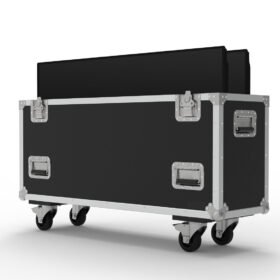 55″ + Screens
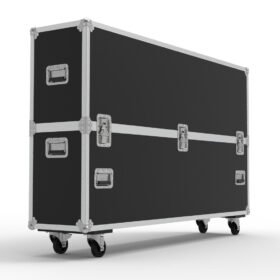 65″ + Screens
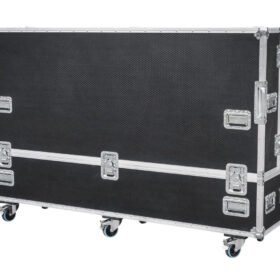 80″ + Screens
Meta title: Drum Kit Flight Case Guide: What Touring Drummers Need
Meta description: Buying your first drum kit flight case? Learn shell padding, cymbal storage, wheel and latch choices, and why ATA-grade plywood matters before you tour.
Slug: drum-kit-flight-case-guide
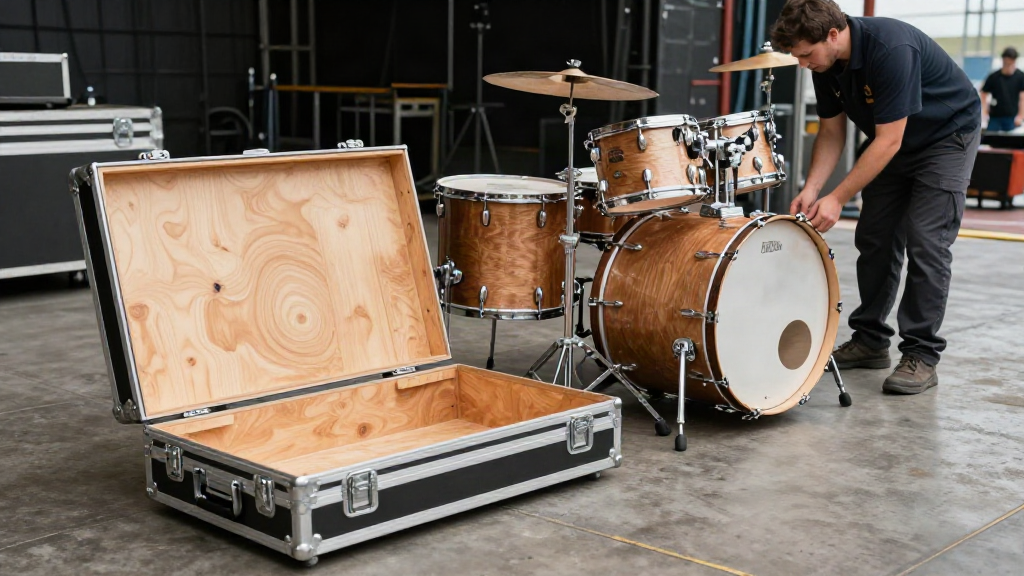
Drum Kit Flight Case Guide: What Touring Drummers Need Before They Buy
If you are about to take a kit on the road for the first time, the case you buy matters as much as the drums inside it. A drum kit flight case is not a padded bag with a better name. It is a structural container built to survive being stacked, forklifted, rained on and dropped between dates. This guide walks you through what to look for, what to measure, and where the cheap options quietly fail.
Why a drum kit needs its own kind of case
Drums are light but bulky, and every part of the kit behaves differently in transit. Shells are round and thin, so they dent or go out of round when something heavy lands on them. Cymbals are flat and brittle, so they crack when they are pressed or allowed to shift. Hardware is dense, sharp and always seems to find the softest thing in the case. A case that works for a guitar or an amp will not solve that mix. A drum kit flight case has to do three jobs at once: cushion round shells, hold flat cymbals rigidly, and keep heavy hardware away from both.
The four things that actually protect a kit
Foam that fits the shells
Foam is not a filler, it is a suspension system. Look for closed-cell foam or dense layered padding shaped to the diameter of your shells, so each drum sits in its own pocket instead of sliding around one open void. If the foam is loose or the compartments are far larger than the drums, the shells will knock against each other every time the case moves.
Dedicated cymbal and hardware storage
Cymbals should travel in a vertical or slot-held position with foam above and below the stack, never loose in the same space as hardware. Hardware belongs in its own compartment or a dense foam channel so stands, pedals and mounts cannot swing into a shell. A separate cymbal compartment and a separate hardware zone are the two features that separate a real touring case from a big box.
Heavy-duty wheels and handles
A loaded drum case is genuinely heavy, and most drummers move it alone. Look for large, high-load-rated wheels mounted on a steel or aluminum plate, not small furniture casters that fold under weight. Recessed spring handles on the ends let two people lift the case into a van or onto a loading dock without tearing the shell. If the case will see a lot of airports, plan for a case that rolls easily when it is upright, because the person moving it is rarely you.
10 mm ply, aluminum edging and butterfly latches
This is the part buyers skip and regret. Mass-market cases are often thin chipboard wrapped in a soft cover. A properly built flight case uses laminated birch ply – our Pro range uses 10 mm, with some controller and screen cases at 9 mm – joined with 30×30 mm or 32×32 mm aluminum L-angle around every edge. The corners take the impact, so the corners need metal. Latches matter too: heavy-duty butterfly latches stay shut through vibration and a bad drop, where small twist catches loosen and pop. If a supplier cannot tell you the ply thickness and the edge profile, that is your answer.
What to measure before you order
Measure your kit properly before you look at a single case:
- Bass drum: diameter and depth
- Toms and floor tom: depth on each, plus their mounting hardware
- Snare: diameter and depth, including any strainer that protrudes
- Cymbal stack: total height when stacked as you actually pack it
- Hardware: the longest collapsed stand and any pedal baseplates
Write those numbers down. The right drum kit flight case is sized from your real kit, not from a generic drum size chart. If you are between two sizes, go up: a case that is slightly roomy and properly foamed protects better than one that closes with pressure on the shells.
One big trunk or several smaller cases?
There are two schools here, and both work.
A single large trunk case keeps the whole kit in one lift and one shipping line, which is simpler for touring and for airline paperwork. The trade-off is weight: a fully loaded trunk needs two people or a ramp, and if the airline loses it, you lose everything.
Several smaller cases – a shell case, a cymbal case, a hardware case – are easier to move and let you fly with only the parts you need, but they multiply the number of things to track. Most working drummers settle on a hybrid: shells and cymbals in protected cases, and everything else in a trunk or drawer case that doubles as the band’s kit storage.
Where the rest of the kit lives
The drum kit is rarely the whole load. Stands, spares, gaff tape, tools, merch and a spare snare all need somewhere to go, and this is where trunk and drawer cases earn their keep. A drawer flight case gives you a pull-out tray that turns a case into a mobile workbench, so the parts you need mid-show stay organized instead of buried at the bottom. A deeper trunk absorbs the bulky items and doubles as a riser or step in a pinch. If your setup also includes DJ or playback gear, the same logic applies to DJ controller flight cases and screen cases, which are built with the same ply, edging and latch standard.
ATA compliance and the questions to ask
ATA-rated construction is what tells an airline and a freight handler that your case was built for repeated commercial transport, not a weekend trip. It means the ply thickness, edge profile, corner protection and latch spec all meet a recognized road-and-air standard. When you talk to any case maker, ask three questions: What thickness is the ply? What aluminum profile protects the edges? What is the load rating on the wheels? Suppliers who build for touring answer immediately. AK Flight Case Industries builds its cases in the UAE, ships worldwide, and stands behind the build with a limited lifetime guarantee on its screen cases – the kind of backing that only makes sense if the case genuinely lasts.
Quick answers for first-time buyers
Is a drum kit flight case worth it for local gigs? If you load in and out more than a few times a month, yes. Wear is cumulative, and one dropped shell costs more than the case.
Can one case hold the whole kit? Only for compact kits. A full kit usually splits across a shell case and a trunk or drawer case, both easier to handle.
Do I need ATA compliance if I am only driving? It helps on the road too. ATA-grade ply and edging resist vibration and repeated loading, not just the hold of a plane.
How do I stop cymbals from cracking in transit? Store them vertically in their own foam-lined slot, never loose in the same compartment as hardware.
The bottom line
Before you buy, measure the kit, budget for proper ply and aluminum edging, and insist on real wheel and latch hardware. A drum kit flight case is a long-term purchase, and the difference between a cheap box and a built case is the difference between replacing shells and simply walking on stage. If you want to see what a properly built case looks like, look at how the same standard is applied across our flight case range – the ply, edge and latch discipline does not change with the instrument inside.
Ready to protect the kit? Talk to us about sizing a drum case around your actual setup, or explore our trunks, drawer cases and controller cases to build the full touring load.
