
 27″ IMAC Flight Cases
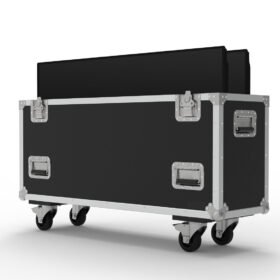 55″ + Screens
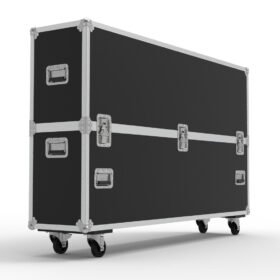 65″ + Screens
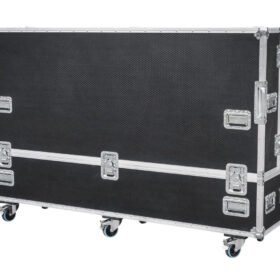 80″ + Screens
Meta title: How to Choose a DJ Controller Flight Case: Sizing & Foam
Meta description: A working DJ’s guide to choosing a DJ controller flight case: measuring internal dimensions, 1/4″ vs 3/8″ ply, foam, wheels and ATA-style air travel rules.
Slug: how-to-choose-dj-controller-flight-case
How to Choose a DJ Controller Flight Case: Sizing, Foam and Airline Rules
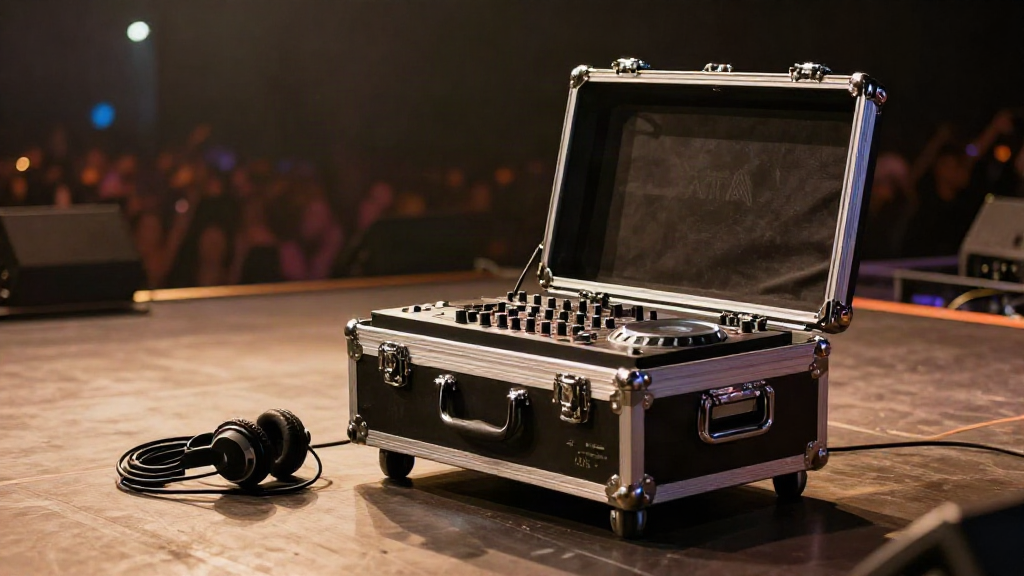
Your controller travels more than it plays. Between the van, the venue and the plane, a DJ controller takes more abuse than any other piece of kit on the rider. A proper dj controller flight case is the difference between a working controller and a repair bill.
This guide walks through the four decisions that actually matter when you buy: internal size, plywood thickness, foam, and wheel setup. Get those right and the case will outlive the controller inside it.
Start With the Real Measurements
Never buy a flight case from the model name alone. Measure the controller yourself and write the numbers down.
- Length and depth of the chassis, including any rear connectors and power inlet.
- Height, measured at the tallest point: knobs, faders and especially jog wheels.
- Cable room. Add at least 1 in (25 mm) to the depth if you intend to leave RCA, USB or power leads plugged in.
- Corner radius. Controllers have rounded corners. A case with square internal corners will not sit flush.
The published number that matters is the internal dimension (ID), not the external one. A case listed as 30″ x 24″ x 8″ ID has a 30″ x 24″ x 8″ usable cavity – the walls sit outside that space. If your controller measures 29″ x 22″ x 7″, that case fits it with foam clearance to spare.
Buy for the controller you will own in two years, not the one on the desk today. A little extra internal volume costs nothing on the road and saves you buying a second case after an upgrade.
1/4″ Ply vs 3/8″ Ply: Match the Build to the Road
Two thicknesses cover almost every touring situation, and the choice is about where the case lives, not how expensive it looks.
1/4″ ply suits the DJ who plays local clubs, hotels and weddings and loads gear by hand. It is lighter, cheaper and still an ATA-style case, so it handles weekly van travel without drama. It is a sound choice when the case rarely leaves your hands.
3/8″ ply is for crews who check gear onto planes, stack cases in a truck and hand them to strangers. The heavier shell resists crushing when other cases land on top, holds latch screws better over years of use and takes the knocks of freight handling. If your controller ever flies, go 3/8″.
For rack-mounted studio and broadcast controllers, you will also see 9 mm and 10 mm birch-ply builds. Those are still ATA-style construction – thicker ply, thicker aluminium edging – because rack gear is heavy and the case carries all of it.
Foam Is What Actually Protects the Controller
A plywood box on its own protects nothing. Foam is the part that absorbs impact, and it is the first thing cheap cases compromise on.
Look for dense closed-cell or polyethylene foam, cut to the controller’s footprint rather than loose filler. The foam should hold the unit so it cannot slide, and there should be a foam layer above the jog wheels so the lid closes on foam, not plastic.
Practical checks:
- Shake the closed case gently. If you hear the controller move, the foam cut is wrong.
- Confirm the foam reaches the top of the controls, not just the base.
- Ask whether the foam is replaceable. Controllers change; good cases let you re-cut foam without replacing the shell.
Wheels, Handles and Dolly Options
Add wheels and you stop lifting. That sounds obvious, but the wheel spec matters.
Dolly wheels – the swivel casters on a bolt-on board – roll a loaded case across a car park and up a ramp without a second person. Look for a high load rating and wheels large enough to clear door tracks and cable covers. Smaller casters catch on everything.
Recessed butterfly latches and spring-loaded handles are the touring standard. Recessed hardware does not snag on other cases or tear the inside of a van, and handles that spring flat stay out of the way when gear is stacked.
If you regularly move one big case plus a bag, a case with dolly wheels and a fold-out lid table gives you a working surface wherever you land.
What “ATA-Style” Means for Air Travel
ATA-style construction is a description of how the case is built, not a sticker you can buy:
- Plywood shell – 1/4″ or 3/8″ depending on duty
- Aluminium edging on every panel joint
- Recessed butterfly catches, not surface-mounted hasps
- Ball corners and steel corner braces
- Foam-lined interior cut to the equipment
That construction is what makes a case air-freight ready. ATA-style cases are built to survive the handling that ATA 300 Category I freight cases are tested against.
Airline Rules: What Actually Happens at the Desk
Airlines price and handle controllers as checked or excess baggage, not carry-on – a controller in a flight case is almost always over the cabin size and weight limits. Three rules keep it simple:
- Know your weight limit. Most carriers cap a single checked bag at 23 kg (50 lb) before excess charges start. Weigh the loaded case at home.
- Use a hard, wheeled, foam-lined case. Soft gig bags get crushed in the hold. A wheeled ATA-style case moves through the airport as luggage, not as a special item.
- Label it as equipment. Put your name, contact number and a fragile note on the case before you hand it over.
If you fly often, ask your case supplier about shipping and freight options upfront. Buying from a supplier who ships worldwide and builds for air travel saves a lot of guesswork at the airport.
Matching the Case to the Controller
The best case is the one built around your exact model. AK Flight Cases builds dedicated units – the Numark NS6II Controller Flight Case is cut for that controller’s layout, with a made-in-Britain heavy-duty build and a foam fit specific to the NS6II.
For broadcast and video controllers, the same principle holds at a larger scale. The Blackmagic ATEM 1M/E Advanced Panel case is a four-part rack-to-rack build in 10 mm birch ply, and the ATEM Production Studio 4K R2R uses the same four-part design with lids that convert into a free-standing table.
Move up to screens and a dual 55″ custom screen case or a single 65″ screen case carries the display the same way you carry the controller – built around the item, not around a generic size.
The Buying Checklist
Before you order, confirm all seven:
- Internal dimensions measured, with cable clearance added
- Ply thickness matched to air travel (3/8″ if it flies)
- Dense foam cut to the controller, with a lid layer
- Wheeled with a rated dolly if you move it loaded
- Recessed latches, ball corners and aluminium edging
- Weight checked against your airline’s limit
- Supplier builds around your exact model
Get those right and the dj flight case stops being a purchase you think about and becomes the piece of kit that quietly does its job every night of the tour.
