
 27″ IMAC Flight Cases
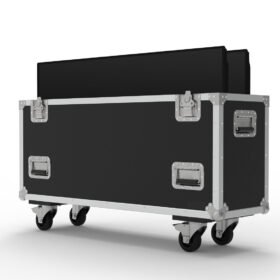 55″ + Screens
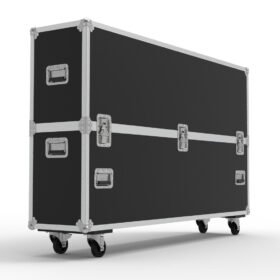 65″ + Screens
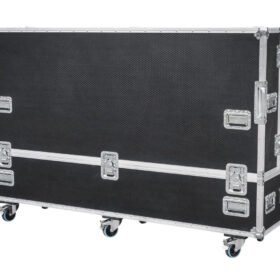 80″ + Screens
Meta title: Flight Case for a 65-Inch TV: Sizing & Foam Guide
Meta description: How to spec a flight case for a 65-inch screen: measure the panel, choose ply and foam, pick single or dual configuration, and get wheels and ATA hardware right.
Slug: how-to-choose-flight-case-65-inch-tv-screen
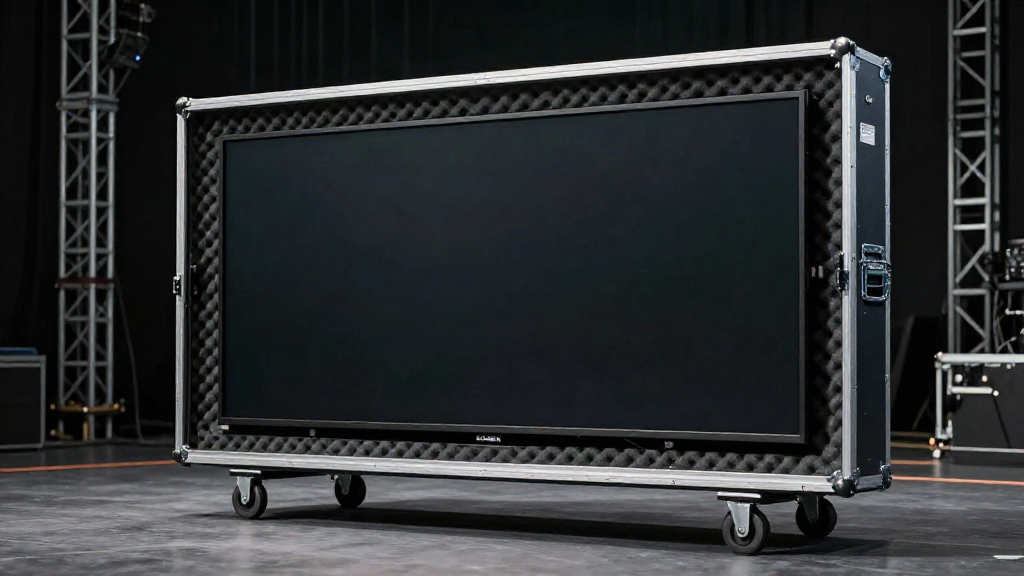
How to Choose a Flight Case for a 65-Inch Screen
A 65-inch display is the most fragile expensive item on most productions. It is a thin sheet of glass and electronics that has to survive a truck, a cargo hold and a venue floor without a single flex. Get the case wrong and you are not buying protection – you are buying a very expensive way to crack a panel.
This guide walks through the decisions that actually matter when you spec a TV flight case: how to measure the screen, what shell and foam to ask for, single versus dual configuration, and the wheel and edging specs that keep a heavy case moving without tearing itself apart.
Measure the panel before you talk specs
Never order a screen case from the advertised size. A “65-inch” label describes the diagonal of the visible picture, not the housing. The panel that has to fit inside the case is wider and taller than that number suggests once the bezel, the stand bracket on the back and any input plates are counted.
Measure the outer housing: width, height, depth. Then add clearance for the foam that will hold it. As a working rule, plan for at least an inch of cushioning on every face, more on the front of the glass. Depth matters as much as width – a thin case with no rear clearance lets the input board take the impact instead of the foam.
If you are moving more than one screen, measure the largest unit and spec the case around it. Mixing a 55-inch and a 65-inch in one footprint means the smaller screen rattles, and rattling screens crack.
Match the shell and the foam to how you travel
Two builds cover most touring work. A 1/4-inch ply ATA-style case is the right answer for screens that ride in a van or a truck and get handled by your own crew. It is lighter, easier to lift and cheaper to move. A 3/8-inch ply shell is what you buy when the case goes into a cargo hold, onto a freight pallet or into a shipping container, where nobody on the other end owes you a careful lift.
Foam is where most off-the-shelf cases cut corners. You want a closed-cell or dense PE foam that recovers its shape after impact, cut to the exact panel, with the screen sitting on foam rather than resting on a hard base. Cheap packaging foam compresses once, then stops doing its job – and that is the moment the screen starts moving inside the case.
Ask one question of any supplier: is the insert cut for my screen, or is it a generic block with air gaps? A cut-to-fit insert is the difference between a transport case and a storage box.
Single or dual screen configuration
Single-screen cases are the default for touring crews because one person can wheel and lift them, and a damaged screen only takes one case out of service. The trade-off is more cases, more weight and more freight.
Dual-screen cases make sense when the two screens always travel together – a pair of matched displays for a broadcast set, a DJ booth or a corporate stand. If you go dual, insist on a divider that separates the two panels rather than stacking them face to face on shared foam. Two screens pressed together transmit every jolt from one panel into the other.
Think about the load-in, not the catalogue photo. A dual case that needs four people to tip it up a ramp will cost you more in crew time over a tour than a second single case ever will.
Wheels, edging and hardware carry the weight
A 65-inch screen case is heavy before the screen goes in. Hardware is not a detail – it is the part that fails.
- Wheels: go for a high-load castor rating with at least two braked wheels on the case, so it can be parked safely on a sloped loading dock. Soft, large-diameter wheels roll over cables and door sills without stalling.
- Edging: heavy-duty aluminum edging protects the ply corners where cases actually get damaged. Look for 30mm-class extrusions rather than thin trim.
- Latches: large butterfly latches last longer than small catches and give a visible, audible close. You will open and shut this case hundreds of times a year.
- Handles: recessed or spring-loaded handles on the faces you actually lift. Cheap handles tear out of the panel long before the case wears out.
Add tour labels and a stenciled ID plate early. A screen case that gets lost at a venue is a screen case that gets opened with a pry bar.
Confirm ATA-style build and ask about shipping
ATA-style construction is the shorthand for a case engineered to survive commercial freight handling – the ply shell, the aluminum extrusions, the recessed hardware and the foam interior working together as one system. If a supplier cannot tell you the ply thickness, the extrusion class and the foam type, they are selling you a crate.
That matters most if the case flies. Screens that travel by air, road and sea across the Middle East need a case built for all three: rigid enough for a pallet stack, weather-resistant enough for humidity, and dimensioned so it does not waste freight volume.
Before you order, settle three practical questions: what does the case weigh empty, does the internal foam come cut to your panel, and how is it shipped to you.
A quick sizing-check list
Before you place an order, you should be able to answer all of these:
- Outer housing dimensions of your largest screen, in all three axes.
- How the screen travels – own truck, freight, or air.
- Ply thickness the job demands, and why.
- Foam type and whether it is cut to fit.
- Empty weight of the case and how many people move it.
- Castor load rating and how many wheels are braked.
- Whether the hardware is recessed and replaceable.
If you can answer those seven, you will spec a case that protects the panel instead of one that simply holds it. Screen transport is not the place to save money – the case is always cheaper than the second screen.
